Education | Girls’ Rights | Dorcas Destiny International | Kenya East Africa
Imagine scoring the highest marks in your entire county. Imagine the future opening up before you: a prestigious school, a chance at a different life, a destiny shaped by your own mind and hands. Now imagine your father selling that future away, trading your dreams for sixty sheep, six camels, and a hundred goats.
This is not a parable. This is the true story of a girl named Nawi, from the remote Turkana County in northern Kenya. And right now, her story is on screen, and it speaks directly to everything Dorcas Destiny International (DDI) stands for.
Meet Nawi: The Film the World Needs to See
Nawi is an award-winning film now streaming on Angel, the faith-based platform behind Sound of Freedom and Cabrini. Based on true events, it follows a 13-year-old girl in Turkana County whose academic brilliance earns her a place at one of Kenya’s top schools. Before she can walk through those doors, her father arranges her marriage to a much older man. What follows is a story of defiance, heartbreak, and the fierce, costly fight to hold on to a future that was almost taken from her.
The film is Kenya’s official Oscar entry for 2025 and has won Best Film at Raindance, the Pan Africa Film Festival, and the Africa Academy Award. It is beautifully made, genuinely moving, and grounded in a reality that millions of girls across East Africa live every single day.
We encourage you to watch Nawi on Angel. Then read on, because what you see on screen is happening right now, and there is something you can do about it.
The World Nawi Comes From: Understanding Turkana County
Turkana County sits in the far northwest of Kenya, one of the most arid and remote regions in the country. It is a place of real resilience and real hardship. Families live off livestock, rainfall is scarce, and access to education, healthcare, and work is severely limited.
For girls in communities like Turkana’s, the pressures run deep. Education competes against long-held traditions that measure a girl’s worth not by her mind but by the bride price she can fetch. Child marriage is not unusual here. It is a structured practice, tied into community expectations and the economics of survival.
But Turkana is not alone. Across Kenya and East Africa, this story plays out in countless ways.
- According to UNICEF, approximately 40% of girls in Kenya are married before the age of 18, with rates significantly higher in rural and pastoralist communities.
- The World Bank estimates that child marriage costs economies billions each year in lost productivity, reduced earnings, and higher healthcare costs, yet it continues precisely because poverty makes it feel like survival.
- Girls Not Brides reports that girls who marry young are far more likely to leave school for good, experience domestic violence, and have children before their bodies are ready.
- UNESCO data shows that in communities where girls’ education is cut short, poverty deepens across generations, touching not just the girl, but her children and her children’s children.
Nawi’s story is not an exception. It is a window.
What Stands Between a Girl and Her Future?
The barriers that threatened Nawi are the same ones DDI faces in the communities we serve across Kenya every day. They include:
Poverty and Financial Pressure
When a family cannot afford school fees, uniforms, or basic supplies, education becomes a luxury. For daughters in particular, the economics of a bride price can make early marriage feel like the practical choice, even when it closes off a child’s future. Our Child Sponsorship Program directly addresses this by providing $40 per month to cover the educational, nutritional, and personal needs of vulnerable children, taking away the financial pressure that puts girls at the greatest risk.
The Weight of Tradition
In many communities, custom and expectation carry enormous force. A girl who pushes back, like Nawi, does not simply disagree with her father. She stands against her entire community. This is why education alone is not enough. Real change requires working with communities, not around them. Building trust with local leaders, families, and caregivers about the long-term value of keeping girls in school is central to how DDI works.
Hunger and Malnutrition
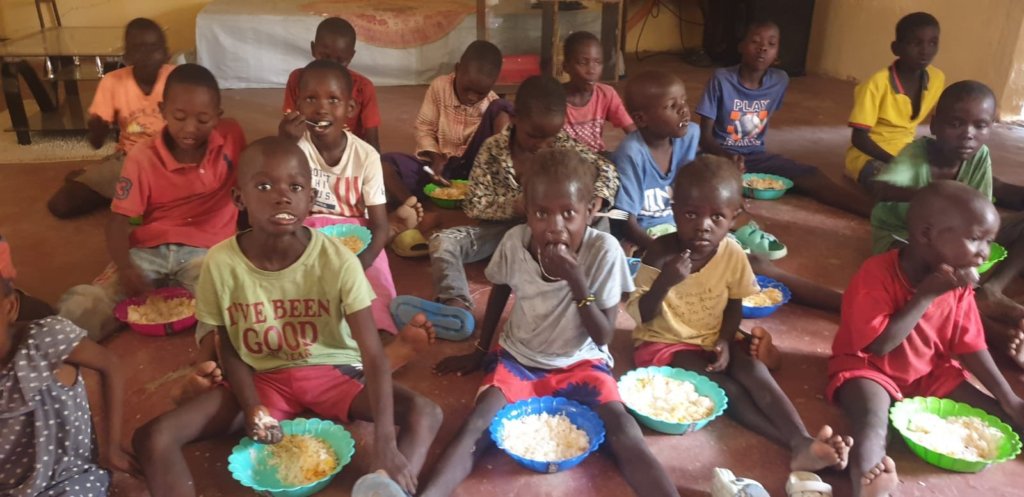
A child who arrives at school hungry cannot learn. For girls already dealing with pressure at home, hunger makes the classroom feel out of reach. Our Feed the School Children Lunch Program ensures that the children in our schools receive a daily nutritious meal, keeping them present, focused, and able to take in what they are being taught. You can read more about why this matters in our post on how nutrition shapes learning and emotional growth.
Vulnerability Without Family Support
Orphaned children and those from unstable home environments carry the heaviest load. Without a parent standing up for their education, girls are often at the mercy of whoever holds authority over them. DDI’s schools, including St. Mary’s Kings Academy, Kings Academy, and Neema & Hekima School, offer more than classrooms. They offer community, structure, and the kind of steady, caring presence that tells every child: you matter here.
Why Stories Like Nawi’s Matter
There is something films can do that statistics cannot. They give a name, a face, and a heartbeat to a crisis that can otherwise feel distant and abstract. When you watch Nawi sit at the top of her class, when you see her dreams alive in her eyes, and then when you watch them be threatened, something shifts in you. That is the point.
The makers of Nawi, a team of German directors Toby and Kevin Schmutzler and Kenyan directors Vallentine Chelluget and Apuu Mourine, built the film to open a conversation between the push for progress and the traditions that still hold too many children in place.
At DDI, we believe that conversation matters. But conversation alone does not keep a girl in school. Action does.
We encourage everyone who watches Nawi to let the film do its work, then turn that feeling into something concrete. You have the power to be part of the answer to a story that is still being written for thousands of girls across Kenya right now. Learn more about why every child deserves a chance to stay in school and what DDI is doing about it.
How You Can Help Write a Different Ending
Nawi’s story, in real life, did not end in silence. And neither do the stories of the children DDI walks alongside. But we need your partnership to keep writing them well.
💛 Sponsor a Child for $40/month: Start Sponsoring Today
📚 Support the High School Scholarship Program: Donate $500 to Fund a Year of Education
✈️ Join a Mission Trip to Kenya: See Our Upcoming Events
📣 Raise Awareness: Follow DDI on Social Media and help us reach more people who care
Every Girl Deserves to Write Her Own Story
Nawi topped her county. She was told that did not matter.
We believe it matters enormously.
At Dorcas Destiny International, we work every day in the belief that a girl’s future belongs to her, not to whoever can name the highest price for it. Education is not a privilege. It is a right. And the children in our schools, like Nawi in that film, carry within them gifts the world cannot afford to lose.
Watch the film. Be moved. Then move.
To learn more about our mission and how you can get involved, visit www.dorcasdestinyintl.org.